
With the Accessibility Strengthening Act (BFSG) taking effect in mid-2025, companies in Germany face a major change: websites, apps and digital services must be designed to be accessible from that point on. The goal is to enable digital participation for everyone – especially people with disabilities. This regulation is based on the European Accessibility Act (EAA), which the BFSG implements in German law.
Accessibility means that digital content and functions are usable for everyone – regardless of physical or cognitive impairments. This includes, among other things:
Not all digital offerings fall under the Accessibility Strengthening Act. Private as well as exclusively business-to-business (B2B) offerings are exempt from the requirements. The rules also do not apply to micro-enterprises, i.e. businesses with fewer than ten employees or an annual turnover or balance sheet total of no more than two million euros.
In addition, a company can be exempted from the implementation obligation if the required adjustments would pose a disproportionate economic risk. In such cases, an exception may be possible after careful review.
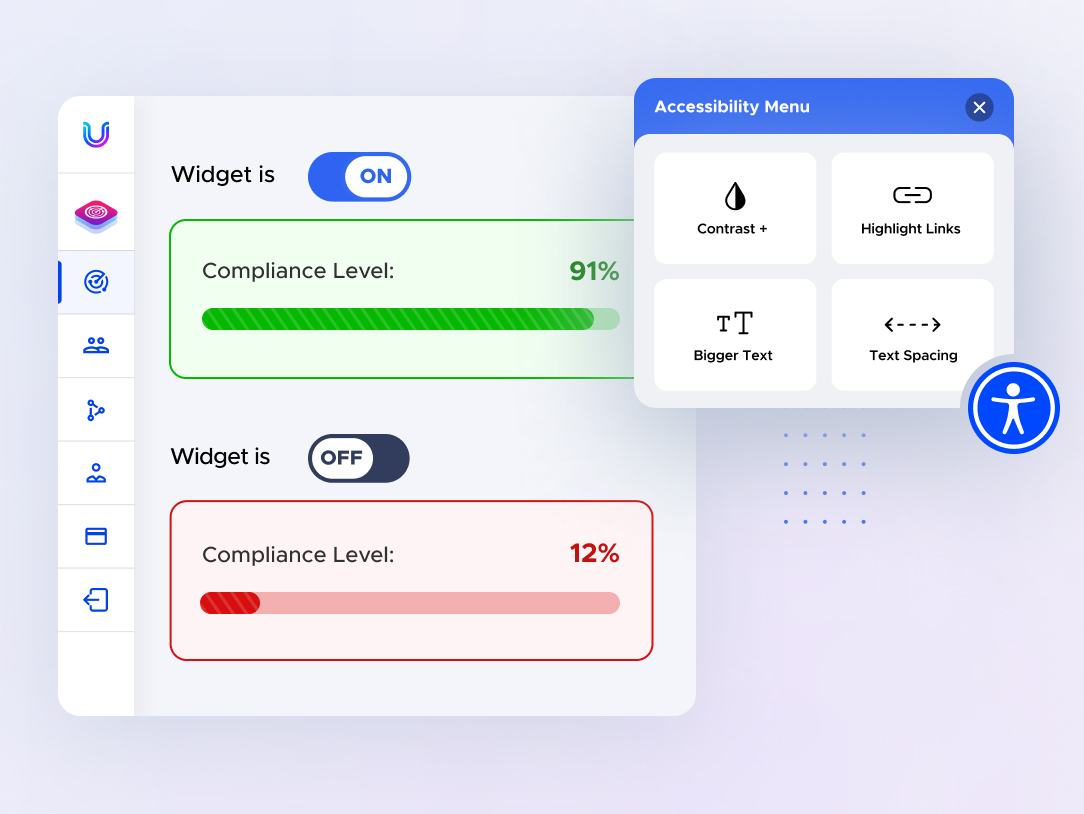
“Overlays” appear to offer simple accessibility fixes via JavaScript – e.g. by changing font sizes or contrast. But they are not tailored to individual websites and cannot fix many barriers – especially context-dependent content such as alternative text.
Problematic: some overlays even interfere with assistive technologies such as screen readers and thereby worsen usability.
Overlays are therefore at best interim solutions. Rather than relying on them permanently, it is often better to make the website accessible directly – more sustainable and usually more cost-effective.
In individual cases – for example colour contrast issues pending a redesign – a supplementary contrast mode can make sense. What matters is a targeted, user-friendly implementation.
There are countless resources and guides that help make your own website accessible. For WordPress there are also several plugins that can improve sites retrospectively or support the creation of an accessible website – some even promising full compliance with the applicable legal requirements.
Making an existing website accessible takes time, so it is well worth preparing an accessibility statement straight away. This does not remove the obligation to implement accessibility, but it shows that the issues have been identified and are being addressed.
We are happy to advise you on the accessibility of your website and support you in implementing the legal requirements.
We are happy to discuss our services and your requirements with you.