
Business Central is Microsoft’s ERP for mid-market companies: finance, purchasing, sales, warehouse, projects and manufacturing in one interface. We implement it, extend it where needed, and connect shop and shipping — so your processes run without media breaks.
Microsoft Dynamics 365 Business Central is a cloud ERP for mid-market companies. Instead of separate tools for accounting, warehouse and orders, you work in one system with a shared data foundation — from quote to payment.
Business Central covers the typical value chain: financials, purchasing, sales, warehouse, projects and manufacturing. Modules can be enabled step by step: many companies start with finance and sales, then add warehouse or production later.
The interface feels like Microsoft 365: role centers, lists and documents are familiar, and you control access by role. Whether in the office, on the go or from home — processes run where your team works. Two release waves per year bring new capabilities; in the cloud, updates arrive automatically. Extensions come from Microsoft AppSource — or we build them as native AL apps for you.
GL, receivables, payables, fixed assets and reporting — documents and numbers in one place.
Quotes, orders, invoices and credit memos with prices, discounts and customer history.
Purchase orders, goods receipt and payables — aligned with warehouse and finance.
Inventory, transfers, picking and locations — visible to sales and purchasing.
Project entries, time and budgets for service-led or project-driven work.
BOMs, production orders and consumption — when you make goods, not only trade them.
In the cloud, much of the operations burden goes away: updates, scaling and many security capabilities sit with Microsoft. For mid-market firms that often means faster time to value and more predictable effort — without maintaining ERP servers yourself. On-premises remains an option when regulation or architecture requires it; we assess that with you.
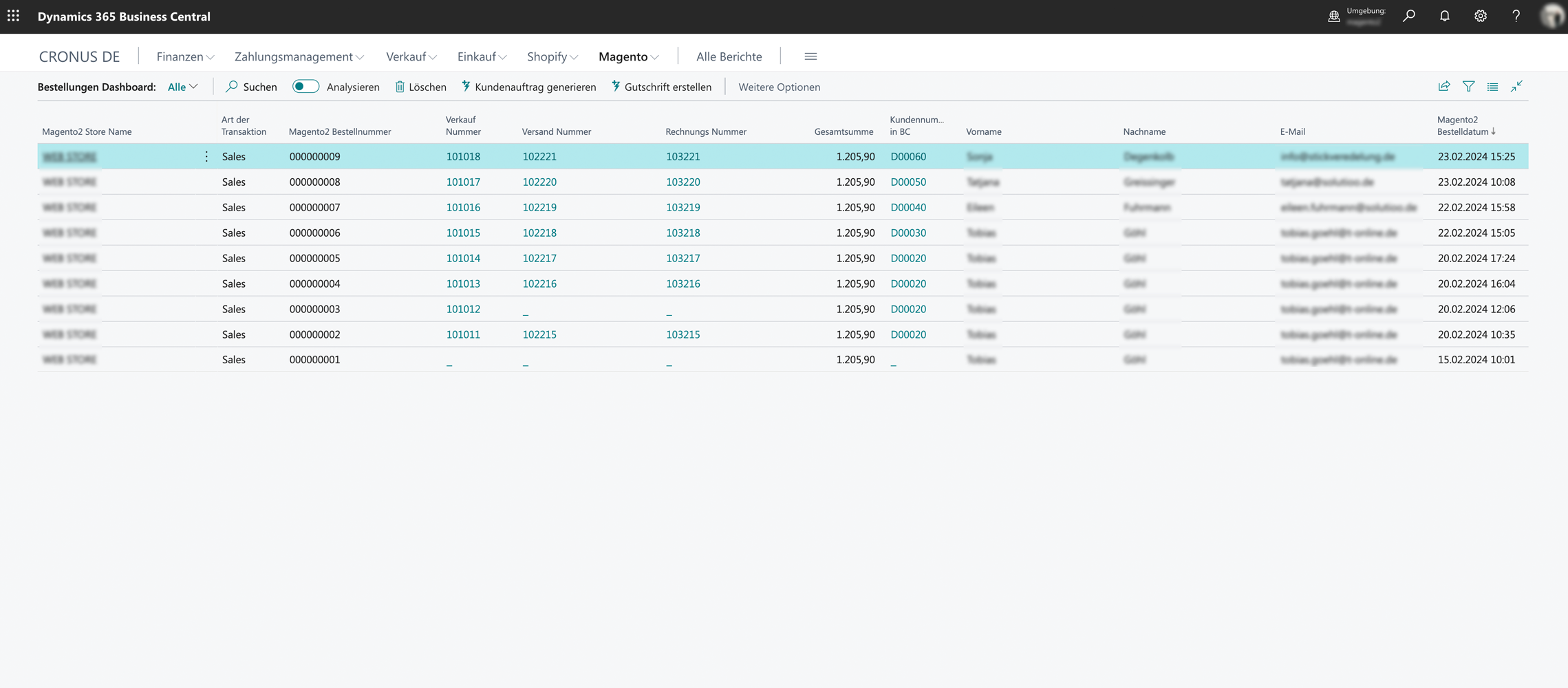
Lists, filters, Excel export and personal role centers make getting started easier than with classic ERP UIs. Accounting sees different tiles than warehouse or sales. The system stays clear even when many processes live inside it.
Microsoft ships two larger functional waves per year; improvements land in between. What the standard does not cover can be added via Microsoft AppSource apps or custom AL extensions — cleanly separated from the core, update-safe and permission-aware.
… you want to replace Excel, siloed tools or a grown legacy system and run finance, warehouse and orders in one system. When you want to connect online shop and shipping without double data entry. When your team already works with Microsoft 365 and wants an ERP that feels like the rest of the Microsoft world.
It is less suitable when you need a highly specialised industry ERP that BC does not cover in standard — or when you must stay off the cloud. In those cases we discuss alternatives and hybrid scenarios openly.
Link Outlook mail to Dynamics requests, start calls via Teams, refresh Power BI charts from ERP data, manage access with Azure: Business Central sits in the Microsoft ecosystem and benefits from shared identities, data and Copilot capabilities when they are available and useful for your scenario.
That shortens paths between sales, accounting and management — without ten separate logins and export loops.
We build online shops and the Business Central apps that connect them to the ERP — agency and software maker in one team, with no middleware in between.
Our own extensions for import, payments, archive and more — on Microsoft AppSource.
Connect Shopware, Magento, WooCommerce and more to the ERP automatically.
Labels and tracking straight from the document — no portal hopping.
Business Central is Microsoft’s mid-market ERP and typically suits teams from a handful to several hundred people. It grows modularly: from a finance package to full inventory management with manufacturing and projects.
Licensing is per user and month (Essentials or Premium). Setup, data migration and apps come on top. We prepare a transparent total estimate for your scenario.
With a structured migration: we take over master data, open items and, on request, history — including with our Universal Import and matching via EAN, VAT ID or name. Details are on our ERP migration page.
Yes. Our native connectors for Shopware, Magento, WooCommerce and TikTok Shop sync items, stock, prices and orders bidirectionally — driven by the job queue in the ERP, without middleware. See Shop ⇄ Business Central for the overview.
For most mid-market scenarios we recommend the cloud: automatic updates, Office-like UX (including mobile), less server maintenance. We review on-premises when there are regulatory or architectural reasons.
Here we explain Business Central as an ERP: modules, day-to-day use and when it fits. Our concrete apps and connectors live on the Business Central apps, Shop ⇄ Business Central and Shipping apps hubs.
We are happy to discuss our services and your requirements with you.